Will I See Predators During the Migration?
March 4, 2026
Are River Crossings Dangerous for Animals in the Migration Process?
March 4, 2026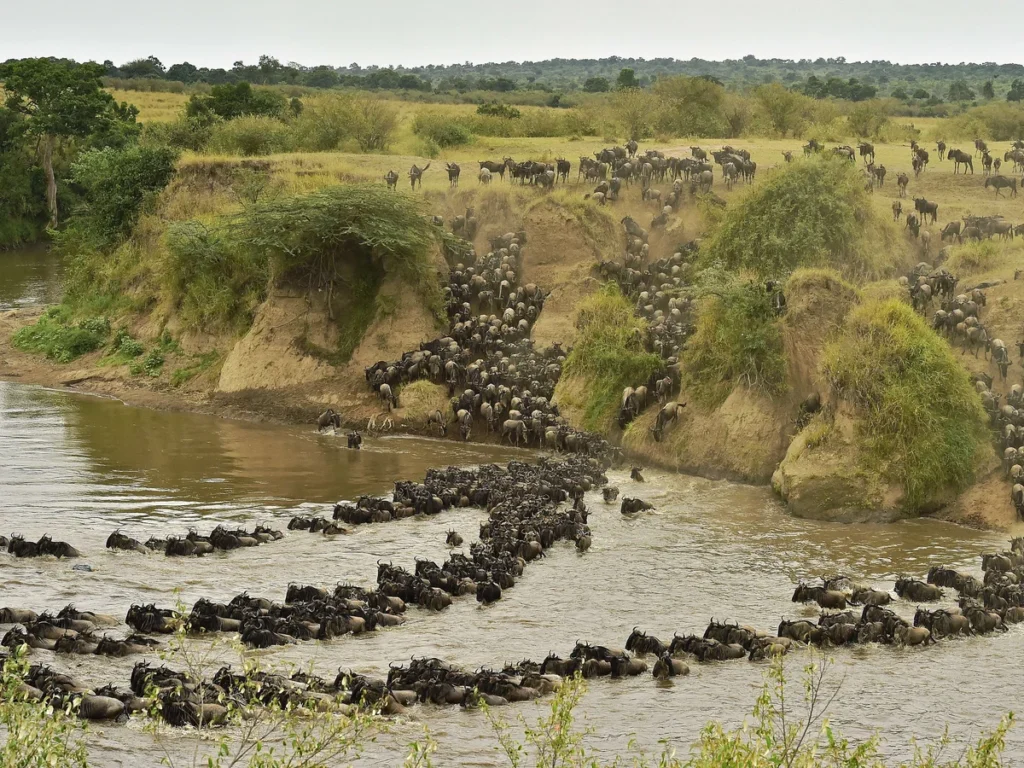
What is the Mara River?
What is the Mara River, and why is it such a central feature of the Great Migrations? Flowing through both Tanzania’s Serengeti National Park and Kenya’s Maasai Mara National Reserve, the Mara River is one of East Africa’s most iconic waterways and a defining landmark for any Kenya Best Safari or Tanzania Safari. This river forms a vital part of the migratory route for millions of wildebeest, zebras, and gazelles that move seasonally between Tanzania and Kenya in search of lush grazing grounds and water. During the peak migration months, the Mara River becomes the stage for dramatic river crossings, where predators lie in wait, creating unforgettable wildlife spectacles. Travelers on Kenya Birding Safaris, Kenya Cultural Safaris, or Tanzania Cultural Safari experiences find that the Mara River not only supports wildlife but also provides a living example of the intricate balance between nature and human activity in East Africa.
The Mara River originates in the Kenyan highlands, flowing southward into the Serengeti plains before looping back north into the Maasai Mara. Its waters sustain local communities, wildlife, and the ecosystems that make the region a world-class safari destination. Access to the river for safari travelers is straightforward: the Maasai Mara is reachable via Nairobi’s Wilson Airport or a scenic overland drive, while the Serengeti portion is accessible through Kilimanjaro International Airport or Arusha with domestic flights to park airstrips. Expectations include witnessing large herds negotiating crocodile-infested waters, observing predator-prey interactions along the riverbanks, and engaging in guided game drives with expert safari rangers who provide ecological insights and photography tips. Safari costs for itineraries focused on the Mara River vary from $400–$600 per person per day for mid-range accommodations and can exceed $1,200 per day for luxury lodges. African Fly-in Safaris ensures travelers experience the Mara River’s majesty with expert guidance, safety, and comprehensive access to both wildlife and cultural highlights.
How Does the Mara River Shape the Great Migration Experience?
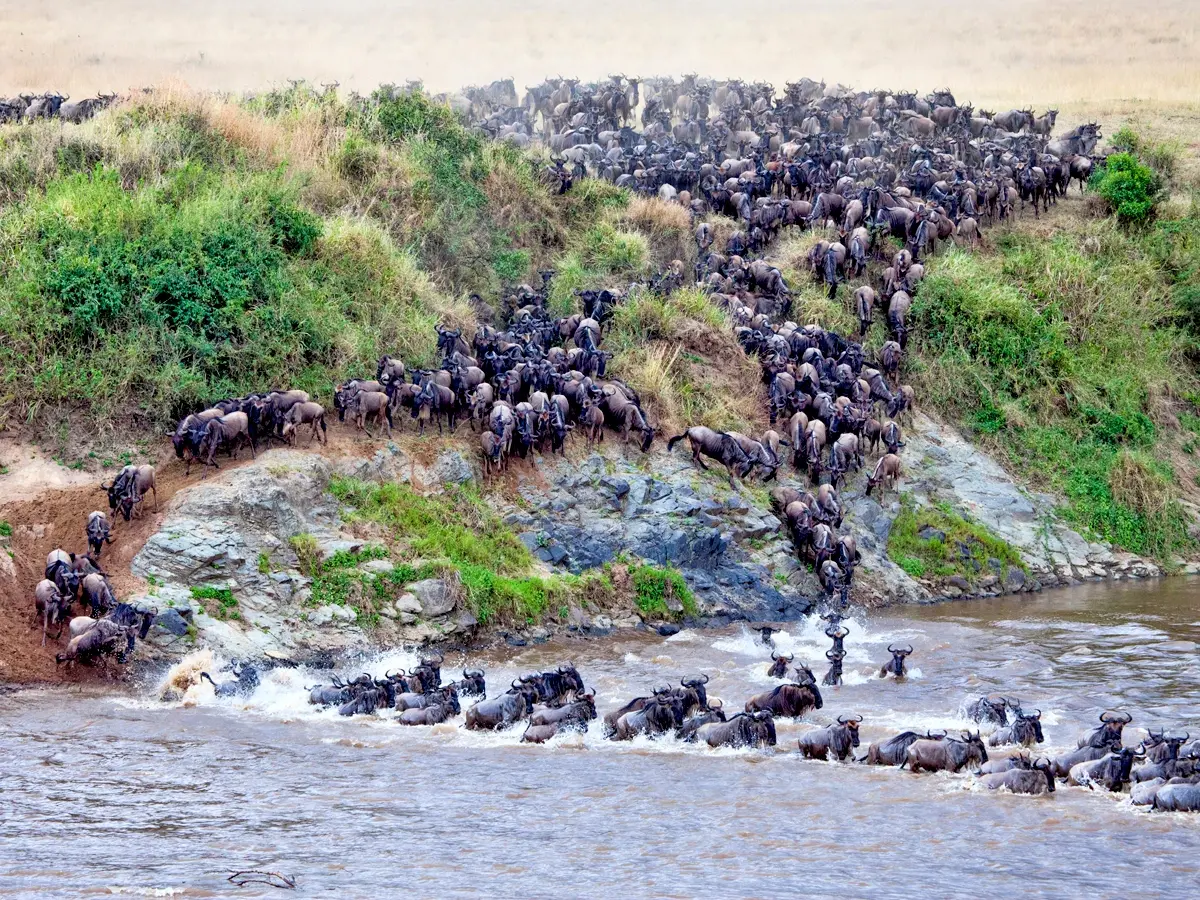
What is the Mara River’s role in shaping the Great Migration, and why is it a must-visit destination for Kenya Safaris and Tanzania Safari travelers? The river represents the ultimate challenge for migratory herds, as wildebeest and zebras must cross crocodile-infested waters to continue their journey north into Kenya or south into Tanzania. These crossings are among the most dramatic events in the animal kingdom, providing safari visitors with intense wildlife action, rare photography opportunities, and firsthand understanding of predator-prey dynamics. Predator species such as crocodiles, lions, and hyenas exploit the river crossings, creating ecological interactions that are both brutal and awe-inspiring, forming the core of a Kenya Best Safari or Tanzania Best Safari experience.
Travelers can reach the Mara River in the Maasai Mara through air travel from Nairobi or via guided overland transfers that take in scenic landscapes en route. Expectations include full-day game drives centered around river crossings, expert commentary on herd behavior, and opportunities to combine wildlife observation with Kenya Birding Safaris, as many migratory and resident bird species congregate along the riverbanks. Costs vary depending on accommodation and transport choices, with mid-range packages averaging $400–$600 per person per day and luxury safaris exceeding $1,200. The best time to witness river crossings is typically between July and October, when the herds enter the Maasai Mara from Tanzania. Choosing African Fly-in Safaris ensures prime positioning for observing crossings safely, with guides who interpret every aspect of the event, from predator behavior to herd strategies, creating an unforgettable Kenya Best Safari experience.
Mara River
What Wildlife Interactions Occur Along the Mara River?
What is the Mara River known for in terms of wildlife encounters during a Kenya Best Safari or Tanzania Safari? The Mara River is most famous for the interplay between migrating herds and the predators that follow them. Crocodiles lie in wait within the river’s currents, while lions, cheetahs, and hyenas stalk the vulnerable animals along the banks. Observing these interactions offers travelers the rare opportunity to see nature’s survival strategies in real-time. Kenya Birding Safaris benefit from the concentration of waterfowl and migratory birds that gather along the river during peak migration, adding another dimension to the wildlife experience. Tanzania Cultural Safari excursions near the river can also highlight how local Maasai communities interact with the river, manage grazing, and preserve conservation practices alongside the natural migration route.
Access is straightforward via flights to Mara airstrips or overland transfers through the Kenyan savannah, while the Serengeti side is best reached via Kilimanjaro or Arusha. Expectations include guided excursions to prime predator observation spots, photography of herd crossings, and interpretive safari sessions covering ecological balance, predator strategies, and riverbank biodiversity. Costs range from $400–$600 per day for mid-range accommodations to over $1,200 daily for luxury lodges. The best time for observing predator interactions at the Mara River is from July to October in the Maasai Mara and January to March during the calving season in southern Serengeti. African Fly-in Safaris ensures expert guidance, safe viewing distances, and detailed insights into the behavior of predators and migratory herds, making every visit to the Mara River a highly educational and visually spectacular component of any Kenya Best Safari or Tanzania Best Safari.
How Can Travelers Experience the Mara River Safely?
What is the Mara River experience like for visitors, and how can it be enjoyed safely during a Kenya Best Safari or Tanzania Safari? Guided safari tours led by professional rangers are essential for observing the Mara River, particularly during the Great Migration when large herds and predators converge. Travelers can witness wildebeest and zebras navigating crocodile-filled waters while remaining protected in safari vehicles, with guides providing interpretive information about the crossing, predator strategies, and herd behavior. Kenya Birding Safaris often run concurrently, highlighting the diversity of bird species that thrive along the river ecosystem. Tanzania Cultural Safari experiences allow visitors to interact respectfully with local Maasai communities and learn how river resources support traditional livelihoods and wildlife conservation simultaneously.
Accessing the Mara River is convenient, with domestic flights from Nairobi to Maasai Mara airstrips or scenic drives along well-maintained routes. Expectations include full-day game drives, interpretive discussions, photography opportunities, and optional cultural engagements with local communities. Costs vary depending on the level of accommodation and transport services, ranging from $400–$600 for mid-range safaris and over $1,200 for luxury lodges. The optimal period to experience the Mara River crossings is July through October in Kenya and January to March in Tanzania. African Fly-in Safaris ensures travelers have expert guides, strategic access to prime wildlife viewing points, and immersive insights into ecological and cultural contexts, delivering a safe, educational, and unforgettable Kenya Best Safari or Tanzania Best Safari.
Why Choose African Fly-in Safaris for a Mara River Safari?
What is the Mara River experience like with African Fly-in Safaris, and why should travelers rely on professional guidance? Partnering with African Fly-in Safaris guarantees that every Kenya Best Safari and Tanzania Best Safari focused on the Mara River is conducted safely, expertly, and with maximum immersion. Our guides track herd movements, identify predator hotspots, and provide interpretive sessions on migration patterns, predator-prey interactions, and river ecology. Kenya Birding Safaris and Tanzania Cultural Safari elements are incorporated for travelers seeking multi-layered experiences that combine wildlife observation, ecological education, and cultural immersion.
Expect curated game drives to the best crossing points, professional photography guidance, and optional visits to nearby Maasai communities for cultural insights. Transparent pricing covers accommodations, park entry, internal flights, and guided excursions, ensuring no hidden costs. African Fly-in Safaris is committed to sustainable tourism practices, supporting conservation efforts along the Mara River while providing unforgettable, safe, and educational wildlife encounters. Understanding what the Mara River is, its importance in the Great Migrations, and its critical role in predator-prey dynamics enables travelers to fully appreciate the Kenya Best Safari and Tanzania Best Safari experience with expertise and authority.