Can I Combine Maasai Mara and Serengeti in One Trip?
March 4, 2026
What is the Mara River?
March 4, 2026
Will I See Predators During the Migration?
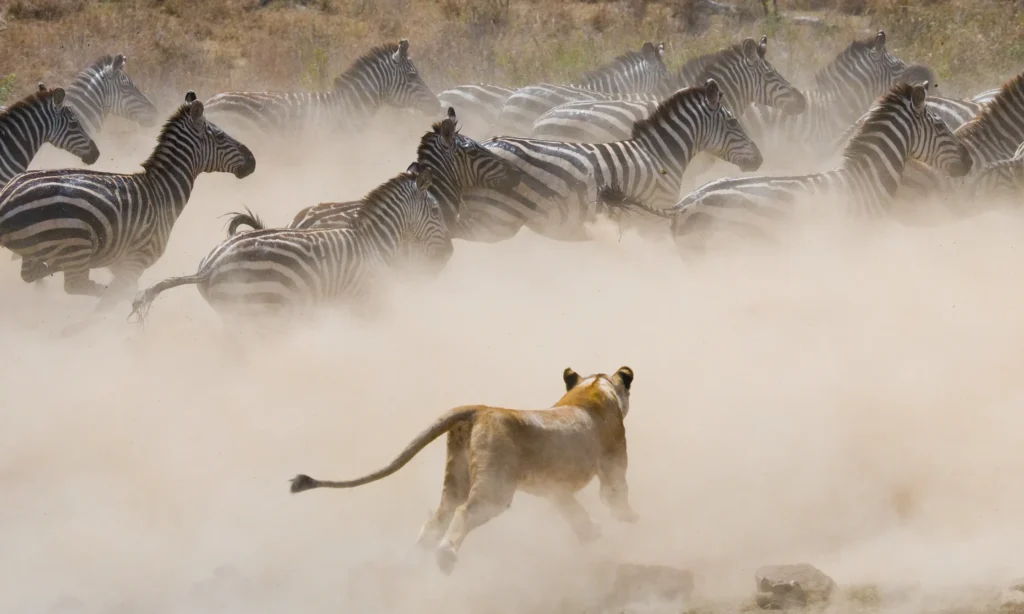
Will I see predators during the migration? This is one of the most frequently asked questions by wildlife enthusiasts planning a Kenya Best Safari or Tanzania Safari to witness the Great Migrations. The answer is an unequivocal yes. The migration not only showcases the movement of millions of wildebeest, zebras, and gazelles but also provides one of the most spectacular predator-prey interactions in the natural world. Observing lions, leopards, cheetahs, hyenas, and crocodiles during the migration offers visitors unparalleled wildlife drama, making the Kenya Best Safari and Tanzania Best Safari experience unforgettable. Travelers seeking both Kenya Birding Safaris and Kenya Cultural Safaris during this period can enjoy a multi-layered journey that combines predator observation with birdwatching and cultural immersion.
In Tanzania’s Serengeti, predators are highly active throughout the migration. January through March, during the calving season in the southern Serengeti, lions, hyenas, and cheetahs target newborn wildebeest calves. This intense period allows Tanzania Safari travelers to witness the circle of life in action while still maintaining safe distances from predators under guided supervision. Access to the southern Serengeti is via Kilimanjaro International Airport or Arusha, with domestic flights to park airstrips or scenic overland drives. Expect full-day guided game drives, predator tracking, and photography sessions that capture dramatic wildlife interactions. Safari costs during this period range from $350–$600 per day for mid-range accommodations and over $1,000 per day for luxury lodges, ensuring a range of options for different traveler preferences. African Fly-in Safaris ensures professional guidance, strategic game-viewing, and immersive experiences to make predator sightings both safe and spectacular.
How Can Tanzania Serengeti Offer Exceptional Predator Encounters?
Will I see predators during the migration in Tanzania’s Serengeti? The answer is emphatically affirmative. The southern Serengeti hosts calving season from January to March, drawing carnivores that prey on vulnerable newborns. Lions patrol the open plains, hyenas hunt in groups along herd edges, and cheetahs use their speed to ambush stragglers. These predator-prey interactions provide a rich educational experience for Tanzania Safari travelers, offering insights into natural selection, herd defense mechanisms, and predator hunting strategies. Tanzania Cultural Safari options nearby also allow guests to witness how indigenous communities live alongside these predators, integrating conservation with cultural understanding.
Reaching the Serengeti’s prime predator zones involves either light aircraft transfers from Kilimanjaro or Arusha or scenic overland drives, giving travelers the flexibility to combine wildlife observation with landscape photography. Expectations include early morning and late afternoon game drives, tracking of active predator packs, and guided interpretive sessions led by experienced safari guides. Costs reflect accommodation type, duration, and internal transport, with mid-range packages averaging $350–$600 per day and luxury lodges exceeding $1,000 per day. Visiting during calving season maximizes predator sightings, making it a highlight of any Tanzania Best Safari. Choosing African Fly-in Safaris guarantees professional guidance, safety, and unparalleled access to predator interactions during this crucial migration phase.
Will I See Predators During River Crossings in Kenya’s Maasai Mara?
Will I see predators during the migration in Kenya? Absolutely. From July to October, the Great Migration reaches the Maasai Mara National Reserve, where dramatic river crossings attract crocodiles, lions, leopards, and hyenas. Predators follow the migrating herds as they cross the Mara River, creating some of the most iconic wildlife scenes in the world. Kenya Best Safari travelers not only witness thousands of wildebeest navigating crocodile-infested waters but also experience the thrill of observing terrestrial predators hunting along riverbanks. Kenya Birding Safaris during this period are equally rewarding, as migratory birds often accompany the herds, offering layered wildlife experiences that combine large mammal behavior with avian observation.
Travelers can reach Maasai Mara via domestic flights from Nairobi’s Wilson Airport or scenic road transfers, providing options for different travel styles. Expectations include full-day game drives along the Mara River, photography opportunities of predator-prey interactions, and optional Kenya Cultural Safaris in nearby Maasai villages, allowing visitors to explore how local communities coexist with these predators. Safari costs vary based on accommodation choices, with mid-range packages averaging $400–$600 per person per day and luxury lodges exceeding $1,200 daily. Timing a visit between August and September maximizes the likelihood of witnessing river crossings with predators actively hunting. Partnering with African Fly-in Safaris ensures strategic positioning, expert guiding, and comprehensive insights into predator behavior throughout your Kenya Best Safari.
How Do Predator Interactions Vary Across Tanzania and Kenya?
Will I see predators during the migration differently in Tanzania and Kenya? Predator encounters vary according to the phase of the Great Migration. In Tanzania’s Serengeti, January to March calving season attracts lions, hyenas, and cheetahs to concentrated herds, offering intimate predator-prey observation. In Kenya’s Maasai Mara, the movement of herds into northern plains from July to October triggers intense hunting activity along river crossings and open savannahs, with crocodiles ambushing crossing wildebeest and lions stalking vulnerable stragglers. Both destinations offer exceptional wildlife viewing, but the type and intensity of predator interactions differ, creating unique safari experiences that can be customized depending on the traveler’s interests in either Kenya Safaris or Tanzania Safari.
Access to prime predator observation points requires careful planning. Southern Serengeti is accessible via Kilimanjaro or Arusha airports, while Maasai Mara is reached through Nairobi. Expectations include guided game drives, early morning and late afternoon observation sessions, and photography-focused excursions. Costs reflect accommodation, park entry, and transport, ranging from $350–$600 per day for mid-range safaris and over $1,000 daily for luxury experiences. African Fly-in Safaris ensures travelers experience predator interactions safely, combining wildlife observation with Kenya Birding Safaris, Kenya Cultural Safaris, and Tanzania Cultural Safari options for a holistic Kenya Best Safari or Tanzania Best Safari.
Why Choose African Fly-in Safaris for Predator-Focused Migration Safaris?
Will I see predators during the migration if I choose African Fly-in Safaris? The answer is a confident yes. African Fly-in Safaris specializes in crafting Kenya Best Safari and Tanzania Safari itineraries that prioritize predator sightings while ensuring safety, comfort, and educational insights. Our expert guides track herd movements, identify predator hotspots, and provide interpretive sessions on hunting behavior, predator-prey dynamics, and ecosystem balance. Kenya Birding Safaris and Tanzania Cultural Safari options are integrated to offer a comprehensive wildlife experience.
Expect curated game drives, photography-focused excursions, and culturally immersive activities with Maasai and Serengeti communities. Transparent costs cover accommodations, internal flights, park fees, and optional cultural visits. Sustainable tourism practices ensure conservation support and responsible wildlife interactions, making every safari ethical, memorable, and impactful. Understanding where and when predators are most active—January to March in southern Serengeti and July to October in Maasai Mara—enables travelers to plan a world-class Great Migration Safari with African Fly-in Safaris, combining Kenya Safaris, Tanzania Safari, Kenya Birding Safaris, and Tanzania Cultural Safari experiences into an unforgettable journey.