How Long Does the Great Migration Last?
March 4, 2026
What Is the Best Month to See River Crossings?
March 4, 2026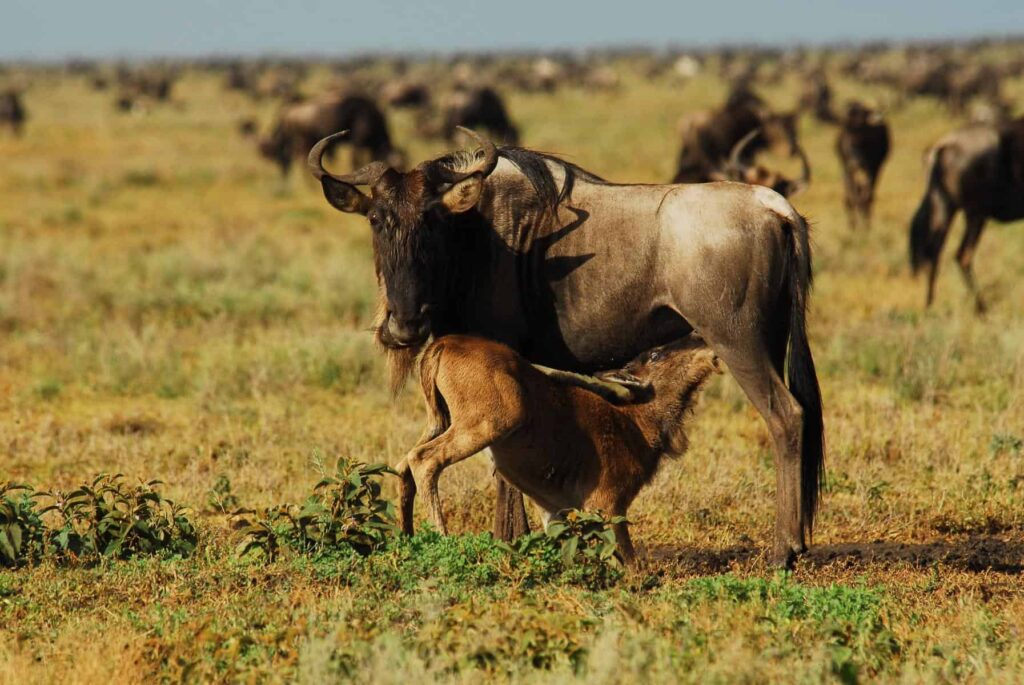
When Is Calving Season for a Great Migration Safari?
When is calving season for a Great Migration Safari? This question is central for wildlife enthusiasts, photographers, and safari travelers planning a Kenya Best Safari or Tanzania Safari to witness one of the most extraordinary wildlife spectacles on the planet. Calving season is the period when thousands of wildebeest give birth to their young in Tanzania’s southern Serengeti, forming one of the densest wildlife congregations in the world. This remarkable phenomenon is not only visually stunning but also ecologically significant, providing food for predators and shaping the movements of herds during the broader Great Migrations. For travelers seeking an authentic East African safari experience, knowing the timing of calving season ensures optimal wildlife encounters, immersive Kenya Birding Safaris, and culturally enriched Tanzania Cultural Safari visits.
The calving season typically occurs between January and March in the southern Serengeti National Park, where nutrient-rich grass and abundant water create the ideal environment for newborn calves. This period attracts predators such as lions, hyenas, and cheetahs, resulting in intense predator-prey interactions that can be safely observed from guided safari vehicles. Beyond wildlife viewing, the calving season provides opportunities for photography, educational experiences, and ecological learning, making it a highlight of both Kenya Safaris and Tanzania Safari itineraries. Reaching the southern Serengeti is facilitated by flights from Kilimanjaro International Airport or Arusha, while overland transfers are available for travelers who prefer scenic routes.
Expect full-day game drives, early morning and late afternoon wildlife observation, and guided tours with expert rangers who provide insights into herd dynamics, predator behavior, and the role of calving in sustaining the Great Migration ecosystem. Costs for Great Migration Safari packages during calving season vary depending on accommodation and duration, with mid-range options averaging $350–$600 per day and luxury tented camps exceeding $1,000 per day. Choosing African Fly-in Safaris guarantees expertly curated itineraries, safety, and seamless logistics, ensuring that travelers experience the calving season with maximum impact and minimal hassle.
How Does the Southern Serengeti Become the Epicenter of Calving Season?
When is calving season for a Great Migration Safari, and why does it occur specifically in southern Serengeti? The southern Serengeti serves as the primary calving grounds because the area offers lush grasslands and consistent water sources after the seasonal rains. During January to March, over 500,000 wildebeest calves are born within a few weeks, creating a dense and vulnerable population that predators actively target. This short but intense period of birth ensures herd survival and accelerates the natural predator-prey cycle, forming the backbone of the Great Migrations and contributing to the ecological balance of Tanzania’s Serengeti ecosystem.
Travelers can reach the southern Serengeti via domestic flights from Arusha or Kilimanjaro, with overland drives taking between six and eight hours, offering scenic views of Tanzania’s countryside. Expectations include guided game drives to observe newborn calves and their mothers, interactions with predators at safe distances, and optional Tanzania Cultural Safari excursions to nearby Maasai villages. Photographers particularly benefit from early morning light and opportunities to capture wildlife behavior and landscape panoramas. Costs are influenced by accommodation choices, vehicle hire, and park entry fees, with mid-range packages from $350–$600 per person per day and premium lodges exceeding $1,000 daily. Visiting during calving season provides unparalleled wildlife density and drama, making it a highlight of any Kenya Best Safari or Tanzania Safari itinerary.
What Wildlife Encounters Can You Expect During Calving Season?
When is calving season for a Great Migration Safari, and what unique wildlife interactions can travelers expect? The calving period offers unparalleled opportunities to observe predator-prey dynamics, as lions, hyenas, and cheetahs target newborn calves. While calves provide nourishment for predators, the sheer density of herds ensures high survival rates, making it one of the most spectacular natural phenomena in East Africa. In addition to large mammals, the southern Serengeti supports diverse birdlife, making Kenya Birding Safaris particularly rewarding during calving season. Migratory birds follow the herds, while endemic species inhabit the grasslands and woodlands, providing layered wildlife experiences for keen observers.
Access to these wildlife-rich areas is primarily through flights to the Serengeti’s southern airstrips or via scenic overland drives from Arusha. Travelers can expect full-day excursions, guided safaris focusing on calving zones, and culturally enriching interactions through Tanzania Cultural Safari programs that highlight Maasai traditions and conservation practices. Costs range depending on accommodation, vehicle hire, and internal transfers, with mid-range safaris starting at $350 per person per day and luxury experiences exceeding $1,000. The best months to witness calving are January through March, aligning with the short wet season, which ensures optimal grazing and herd concentration. African Fly-in Safaris provides expert guidance, ensuring travelers witness the calving season safely and meaningfully, with full access to the best viewing spots and cultural insights.
How Does Calving Season Impact the Great Migration Across Tanzania and Kenya?
When is calving season for a Great Migration Safari, and how does it influence the broader movement of animals across East Africa? Calving season in southern Serengeti sets the stage for the subsequent phases of the Great Migration. Following the January to March birth period, herds gradually move northwest through central Serengeti and the western corridors, seeking new grazing as the dry season begins. By July to October, the herds reach Kenya’s Maasai Mara, where river crossings provide iconic safari imagery. This cyclical movement defines the Kenya Best Safari experience, offering travelers a chance to witness different stages of the migration within one trip.
Travelers reach central and western Serengeti through scheduled flights or guided road transfers, with lodges strategically located along migration routes to maximize wildlife sightings. Expectations include full-day game drives tracking herd movement, Kenya Birding Safaris focusing on seasonal avian species, and Tanzania Cultural Safari engagements with local communities who have coexisted with wildlife for centuries. Costs vary by accommodation tier, park entry fees, and internal travel, with mid-range safaris averaging $350–$600 per person per day and luxury tented camps exceeding $1,000. Visiting during calving season ensures travelers experience not only newborn wildlife but also the subsequent movements that create the Great Migration’s epic scale, making it a must-see for any Kenya Safaris or Tanzania Safari itinerary.
Why Choose African Fly-in Safaris for a Great Migration Calving Season Safari?
When is calving season for a Great Migration Safari with professional guidance? Partnering with African Fly-in Safaris ensures travelers witness this ecological marvel with expertise, comfort, and authenticity. Our guides track herd movements, identify optimal viewing locations, and provide educational insights on calving, predator behavior, and migratory patterns. Kenya Birding Safaris and Tanzania Cultural Safari excursions are incorporated to create a comprehensive experience that combines wildlife spectacle with ecological and cultural education.
Expect professionally guided game drives, tailored itineraries for optimal herd observation, and luxury or mid-range accommodations positioned near migration hotspots. Transparent pricing includes park fees, transport, and optional cultural visits. African Fly-in Safaris’ commitment to sustainable tourism ensures conservation support for the Serengeti ecosystem and engagement with local communities, making every safari responsible and impactful. Ultimately, understanding when calving season occurs—from January to March in southern Serengeti—empowers travelers to plan an unforgettable Kenya Best Safari and Tanzania Safari, capturing the drama, beauty, and ecological significance of the Great Migration with expert guidance and immersive experiences.