What Is the Minimum Age for a Walking Safari?
March 4, 2026
Where Can I See the Great Migration in Kenya?
March 4, 2026
What is the Great Migration For a Kenya and Tanzania Safaris?
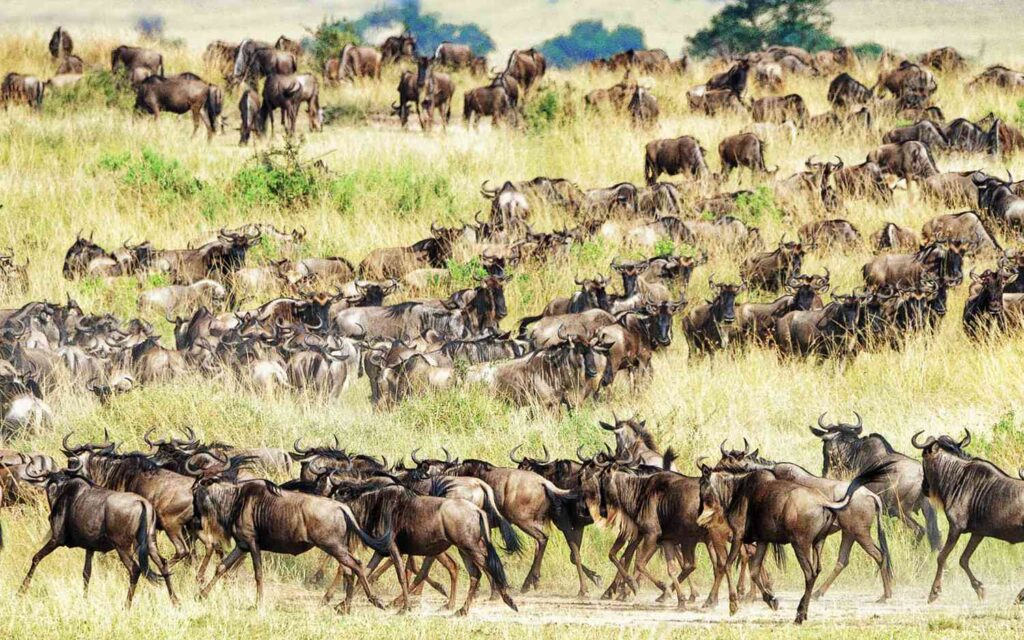
What is the Great Migration? This extraordinary natural phenomenon is the world’s largest overland wildlife movement, where millions of wildebeest, zebras, and gazelles travel in a continuous circular journey across the vast plains of East Africa in search of fresh grazing and water. Often described as the greatest wildlife show on Earth, the Great Migration unfolds between Kenya and Tanzania, creating an unmatched safari spectacle that defines both a Kenya Best Safari and a Tanzania Safari experience.
Every year, over 1.5 million wildebeest, accompanied by hundreds of thousands of zebras and antelope, move across the ecosystem linking Serengeti National Park and Maasai Mara National Reserve. Driven by seasonal rainfall patterns, this migration follows an ancient survival instinct that has shaped the ecological balance of the region for centuries. Unlike isolated wildlife sightings, the Great Migrations represent a dynamic and ever-moving drama filled with predator-prey interactions, dramatic river crossings, and powerful displays of endurance.
Beyond thrilling game drives, the migration supports Kenya Safaris, Kenya Birding Safaris, Kenya Cultural Safaris, and Tanzania Cultural Safari extensions that deepen visitor engagement. Photographers, conservationists, filmmakers, and global adventurers travel to East Africa specifically to witness this iconic movement. Through expert planning and deep regional knowledge, African Fly-in Safaris crafts immersive itineraries that place travelers at the right location at the right time to experience the Great Migration in its full glory.
Understanding what the Great Migration is requires appreciating both its scale and its significance. Consequently, this guide explores the essential destinations involved, explains how to reach them, outlines costs and expectations, and highlights why choosing African Fly-in Safaris ensures an authentic, expertly guided safari adventure in East Africa.
What Happens in Serengeti National Park During the Great Migration?
What is the Great Migration in Serengeti National Park and why is it central to a Tanzania Safari? Located in northern Tanzania, the Serengeti forms the starting point and largest portion of the migration cycle. Vast open plains stretch endlessly toward the horizon, creating an ideal environment for calving, grazing, and predator interactions.
Between January and March, southern Serengeti becomes the calving ground for hundreds of thousands of wildebeest. During this period, newborn calves take their first steps within minutes of birth, while lions, cheetahs, and hyenas patrol nearby. From April to June, herds begin moving northwest as rains diminish, forming dramatic columns that define the Great Migrations landscape.
Reaching Serengeti National Park involves flying into Kilimanjaro International Airport near Arusha, followed by a domestic light aircraft transfer to one of several airstrips inside the park. Alternatively, overland safaris from Arusha provide scenic drives through the Tanzanian countryside.
Expect extensive game drives, professional guiding, and luxury tented camps positioned along migration routes. Costs vary depending on accommodation level and season, with daily Tanzania Safari packages ranging from mid-range options around $350–$600 per person to luxury experiences exceeding $1,000 per day.
Visiting between June and October offers prime wildlife concentration and favorable weather conditions. Selecting Serengeti for the Great Migration guarantees immersive wildlife viewing combined with optional Tanzania Cultural Safari visits to Maasai communities near the conservation areas.
Why Is Maasai Mara National Reserve Famous for Great Migration River Crossings?
What is the Great Migration experience in Maasai Mara National Reserve and why does it define a Kenya Best Safari? Located in southwestern Kenya, the Maasai Mara becomes the dramatic stage for river crossings between July and October. During this period, migrating herds attempt to cross the Mara River, facing strong currents and lurking Nile crocodiles.
Unlike predictable wildlife sightings, river crossings are spontaneous and emotionally intense. Thousands of wildebeest gather at riverbanks before plunging into the water in chaotic bursts of movement. Meanwhile, predators such as lions and leopards wait strategically along crossing routes, creating unforgettable safari moments.
Accessing Maasai Mara involves flying from Nairobi’s Wilson Airport to various airstrips within the reserve or driving approximately five to six hours from the capital. Expectations include twice-daily game drives, expert naturalist interpretation, and high chances of witnessing dramatic predator action.
Pricing for Kenya Safaris in the Maasai Mara depends on season and lodge category, generally ranging from $400 to over $1,200 per person per night. Booking during peak migration months ensures optimal sightings, although the reserve offers exceptional wildlife year-round.
Complementing wildlife exploration, Kenya Cultural Safaris introduce travelers to Maasai traditions, pastoral lifestyles, and beadwork artistry. Additionally, Kenya Birding Safaris thrive in the Mara ecosystem, which hosts over 470 bird species, adding avian diversity to the migration spectacle.
How Does Timing Influence the Great Migrations Across Kenya and Tanzania?
What is the Great Migration without understanding its seasonal rhythm? Movement patterns depend entirely on rainfall cycles rather than fixed calendars. Southern Serengeti hosts calving season early in the year, while central and western corridors experience herd transit between May and July. Northern Serengeti and Maasai Mara become focal points from July to October during river crossing months.
Planning a Kenya Best Safari or Tanzania Safari around the Great Migrations requires expert coordination to align travel dates with herd positions. Dry seasons generally offer easier wildlife tracking and clearer visibility, making June through October highly popular among international travelers.
Choosing the right time enhances photographic opportunities and wildlife density. Working with experienced safari planners ensures accurate predictions based on ecological knowledge rather than guesswork.
Why Choose African Fly-in Safaris for the Great Migration Experience?
What is the Great Migration when guided by true East Africa experts? At African Fly-in Safaris, we transform this natural event into a seamless and professionally curated journey grounded in deep field experience. Strong partnerships with reputable camps in Serengeti and Maasai Mara allow us to position guests strategically along migration routes.
Comprehensive itinerary design integrates Kenya Safaris with Tanzania Safari circuits for a cross-border adventure that follows herd movement naturally. Transparent pricing structures provide clarity on accommodation, park fees, and internal flights. Personalized consultation ensures each traveler selects the ideal season, lodge style, and activity mix.
Commitment to sustainable tourism strengthens conservation efforts that protect the Great Migrations ecosystem. Community engagement through Kenya Cultural Safaris and Tanzania Cultural Safari visits fosters mutual respect and economic empowerment for local populations.
Ultimately, what is the Great Migration? It is a breathtaking display of survival, movement, and ecological harmony that defines East African wildlife heritage. Choosing African Fly-in Safaris guarantees professionalism, authenticity, and an unforgettable Kenya Best Safari or Tanzania Safari experience built on trust, expertise, and passion for Africa’s extraordinary landscapes.